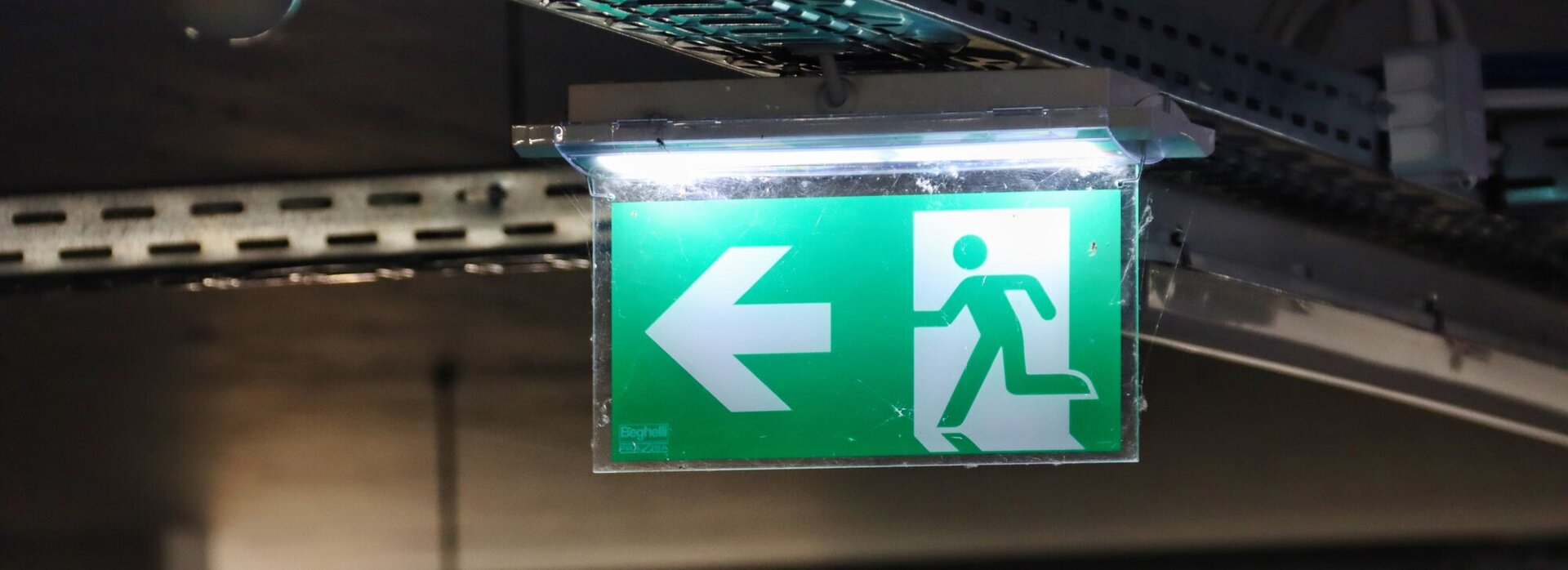
Panic lock conversions & escape route security
Escape and rescue routes must be guaranteed at all times – regardless of whether it is an office building, hotel, residential building, industrial property, residential complex, or public facility. At the same time, it must not be possible for unauthorized persons to misuse these doors or exits.
Panic locks and escape route security devices resolve precisely this conflict of objectives: they enable quick and safe evacuation in an emergency, while providing reliable protection against unauthorized access in everyday life.
Difference between EN 179 and EN 1125
In Europe, two fundamental standards apply to emergency and panic doors, which precisely define their area of application and type of operation:
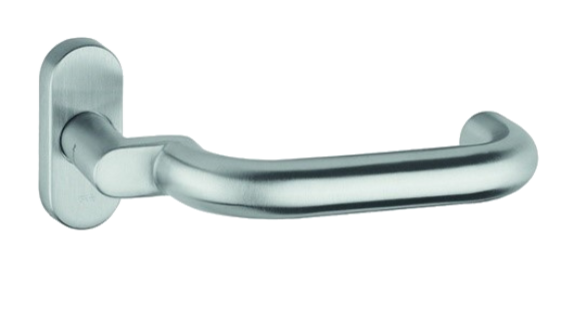
EN 179 – Emergency exit locks:
This standard applies to doors in areas that are used exclusively by trained or regularly present persons – such as offices, staff rooms, or technical areas.
In an emergency, the door can be opened using a door handle. Operating the door requires a certain degree of familiarity with it, which is why it is rarely used in public buildings.
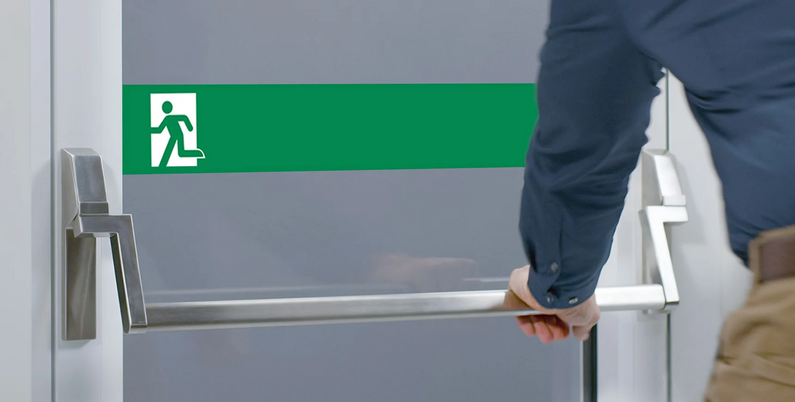
EN 1125 – Panic door locks:
This standard applies to publicly accessible areas where people are present without instruction – e.g., schools, hotels, shopping centers, or event venues.
The door can be opened at any time by pressing a horizontal panic bar or push bar – even in the dark, in smoke-filled conditions or in panic situations. Simple, intuitive operation guarantees a quick escape route even when there are large numbers of people.
Both systems ensure that doors can always be opened in the direction of escape in case of danger, but differ in terms of operation and intended user group.
Panic functions E, B, C, and D
Panic locks are available in various functional designs. The letters E to D describe the respective function of the inside and outside of the door.
- Function E – Changeover function: There is always a
panic function on the inside – the door can be opened at any time by pressing the inside handle. The door is permanently locked on the outside (knob or fixed plate). It can only be opened from the outside with a key.
- Function B – Switch function: Panic function
on the inside, handle on the outside that can be engaged or disengaged with the key.
This allows the outside to be released or locked as required.
Function C – forced locking function: panic function
on the inside; the outside handle is always disengaged (idle).
Opening from the outside is only possible with the key inserted, which can only be removed after locking.
This function prevents the door from remaining unlocked unintentionally.- Function D – Passage function: Panic function
on the inside, handle on the outside, the door is equipped with handles on both sides.
If the door is locked, it can be opened from the inside at any time using the panic function.
After pressing the inside handle, the door can also be opened automatically from the outside.
To lock the outside again, the door must be locked with the key.
Our services at a glance
We carry out panic lock conversions, retrofits, and escape route security measures of all kinds—professionally, in accordance with standards, and tailored to the respective area of application. This includes:
Retrofitting existing doors in accordance with EN 179 or EN 1125
Replacement and installation of panic locks with defined panic function (E, B, C, or D)
Installation of panic bars and escape door fittings
Installation of escape door monitors for controlled securing of escape routes
Adaptation and repair of existing escape door systems during renovations
- Inspection, maintenance, and acceptance in accordance with applicable safety and fire protection standards
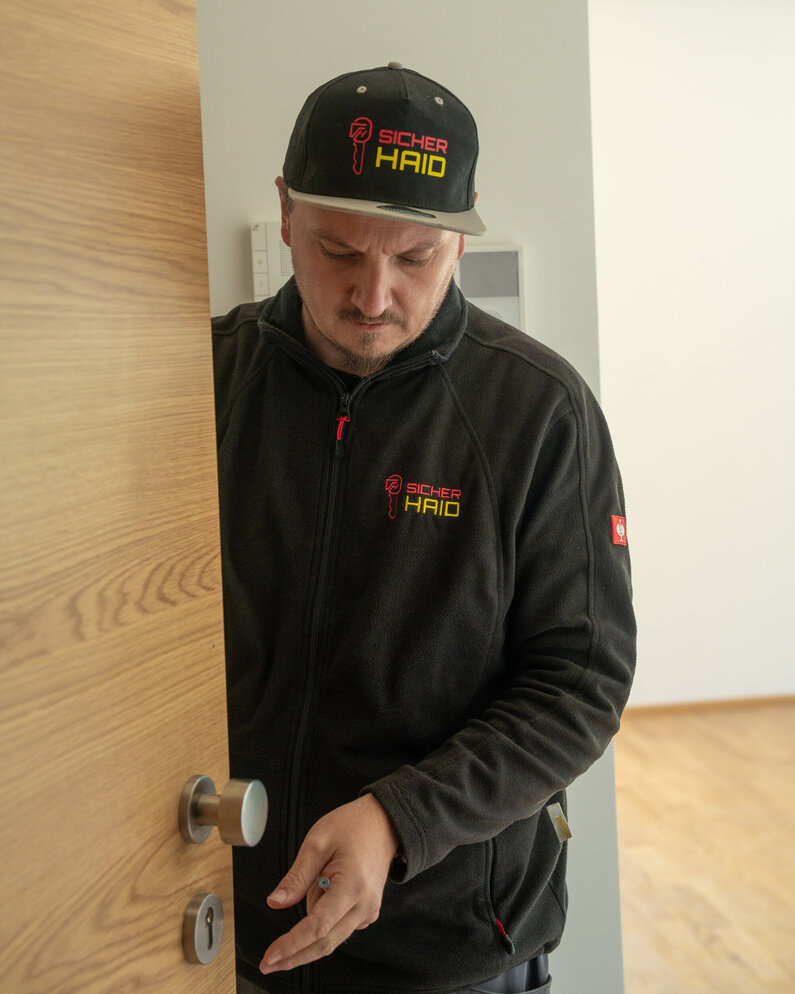
Our solutions combine security, ease of use, and legal compliance. Doors remain reliably secured in everyday use, but can be opened freely and safely at any time in an emergency.
Why standard-compliant escape route security is important
The right escape route security protects lives and is required by law. Incorrectly installed panic functions or unauthorized locks can endanger people in an emergency and result in legal consequences.
With standard-compliant panic locks, tested fittings, and professional installation, we ensure that your building meets legal requirements—and that you can rely on maximum functionality in an emergency.
Conclusion
A professionally installed escape route security system with panic locks is an essential component of modern building security. At Sicherhaid, we plan, deliver, and install panic locks, panic bars, and escape door monitors tailored to your specific use, door type, and security requirements.
Whether for new construction, renovation, or retrofitting, we ensure that your doors are legally compliant, functional, and suitable for use as escape routes.